
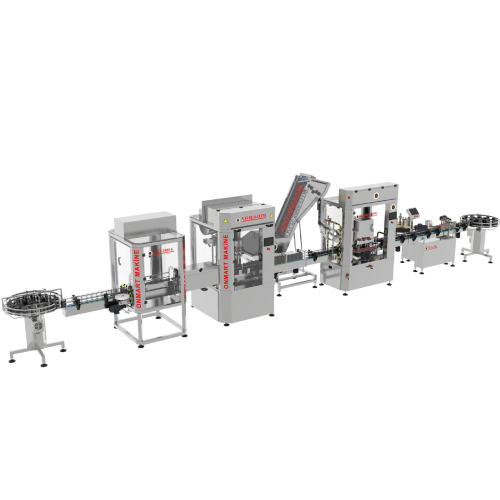
What is a Liquid Filling Machine?
A liquid filling machine is specialized industrial equipment designed to accurately dispense liquid products into containers, bottles, jars, or other packaging formats. These machines are essential across numerous industries including food and beverage, pharmaceuticals, cosmetics, chemicals, and household products.
Modern liquid filling machines range from simple semi-automatic tabletop units to sophisticated fully automatic production line systems capable of filling thousands of containers per hour with precision accuracy of ±0.5% or better.
Types of Liquid Filling Machines
1. Piston Filling Machines
Piston fillers use a cylinder and piston mechanism to draw product from a supply tank and dispense it into containers. They are ideal for:
- Thick, viscous liquids (sauces, creams, gels)
- Products with particulates (chunky sauces, dressings)
- Applications requiring precise volume control
- Small to medium production volumes
Advantages: Excellent for viscous products, easy to clean, accurate volume control
Limitations: Slower than flowmeter systems, not ideal for very thin liquids
2. Flowmeter Filling Machines
Flowmeter fillers use electronic sensors to measure liquid flow rate and calculate precise fill volumes. They are perfect for:
- Thin, free-flowing liquids (water, juice, oil)
- High-speed production lines
- Applications requiring contactless filling
- Products where contamination must be avoided
Advantages: High speed, no moving parts in contact with product, easy sterilization
Limitations: Less accurate with viscous products, higher initial cost
3. Gravity Filling Machines
Gravity fillers use the natural force of gravity to fill containers from an overhead tank. Best suited for:
- Very thin, foamy liquids
- Applications where speed is less critical
- Budget-conscious operations
4. Vacuum Filling Machines
Vacuum fillers create negative pressure to draw liquid into containers. Ideal for:
- Glass bottle filling
- Products requiring precise fill levels
- Applications where foam control is critical
5. Pump Filling Machines
Pump fillers use various pump types (gear, lobe, peristaltic) to move product. Suitable for:
- Wide viscosity range
- Shear-sensitive products
- Applications requiring gentle product handling
Key Selection Criteria
Product Characteristics
| Factor | Considerations |
| Viscosity | Thin liquids = flowmeter/gravity; Thick = piston/pump |
| Particulates | Chunky products require piston fillers with large ports |
| Foaming | Bottom-up filling or vacuum systems for foam control |
| Temperature | Hot-fill products need heat-resistant components |
| Chemical compatibility | Material selection for product contact parts |
Production Requirements
- Speed: Containers per hour (CPH) requirement
- Accuracy: Acceptable fill tolerance (typically ±0.5% to ±2%)
- Container types: Size range, material, shape variations
- Changeover time: Frequency of product/container changes
Industry-Specific Considerations
Food & Beverage: Hygienic design, FDA/EU compliance, CIP capability
Pharmaceutical: GMP compliance, validation documentation, sterile filling options
Cosmetics: Gentle handling, aesthetic fill levels, versatile container handling
Chemical: Corrosion-resistant materials, explosion-proof options, safety features
Integration with Complete Production Lines
A liquid filling machine rarely operates in isolation. Modern automatic filling lines integrate multiple processes:
- Container feeding: Bottle feeding tables or unscramblers
- Pre-filling: Rinsing, air blowing, or sterilization
- Filling: Primary filling operation
- Post-filling: Capping, sealing, labelling
- End-of-line: Cartoning, case packing, palletizing
Maintenance and Operation Best Practices
- Regular calibration of filling systems ensures accuracy
- Preventive maintenance schedules prevent costly downtime
- Operator training on changeover procedures reduces setup time
- Spare parts inventory minimizes production interruptions
Conclusion
Selecting the right liquid filling machine requires careful analysis of your product characteristics, production requirements, and long-term business goals. Whether you need a simple semi-automatic unit or a complete turnkey filling line solution, working with an experienced manufacturer ensures you get equipment optimized for your specific needs.
| Ready to upgrade your liquid filling operations? Contact Onmart Makine for a free consultation. Our team has 21+ years of experience designing filling solutions for food, chemical, cosmetic, and pharmaceutical industries across Turkey, Russia, and global markets. |